Market & policy
Overview of China's noise-pollution-control policy
From the Noise Pollution Prevention and Control Law to the 14th Five-Year Action Plan — key control points across industry, construction, transportation, and community life.
Core governing legislation
- Noise Pollution Prevention and Control Law (effective 2022-06-05): establishes the public's right to quiet, applies categorized supervision across four major domains with party-responsibility provisions, brings industrial noise under pollutant-discharge permitting, and escalates penalties.
- Ecological and Environmental Code (Noise Pollution Prevention and Control Volume) (effective 2026-08-15): unifies supervision rules and strengthens controls on vibration, low frequencies, indoor sound insulation, and automated monitoring.
- Public Security Administration Punishments Law (revised, effective 2026-01-01): places community-life noise directly under police jurisdiction.
14th Five-Year noise-pollution-control action plan
Core targets: by 2025, daytime compliance in functional zones of prefecture-level and above cities ≥96% and nighttime ≥88%. Priority tasks cover tightening control of construction noise, governing transportation noise, addressing community-life noise, and improving standards and monitoring.
Key control points across four domains
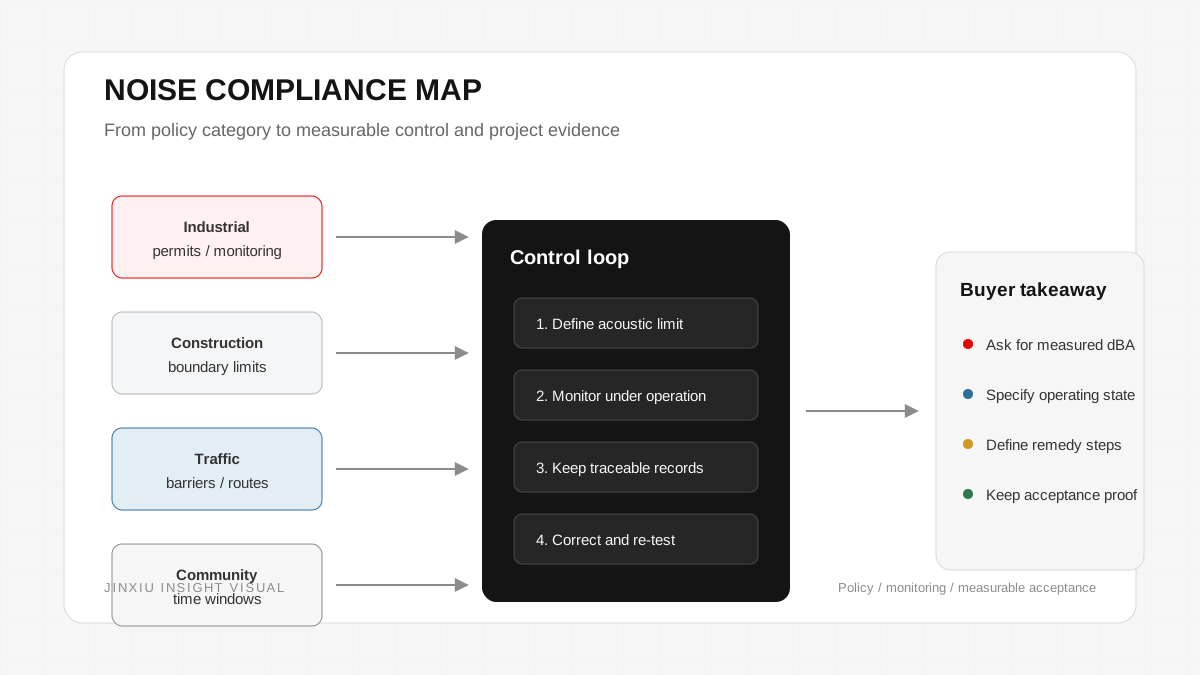
- Industrial noise: brought under pollutant-discharge permitting, requiring noise reduction, monitoring, and recordkeeping.
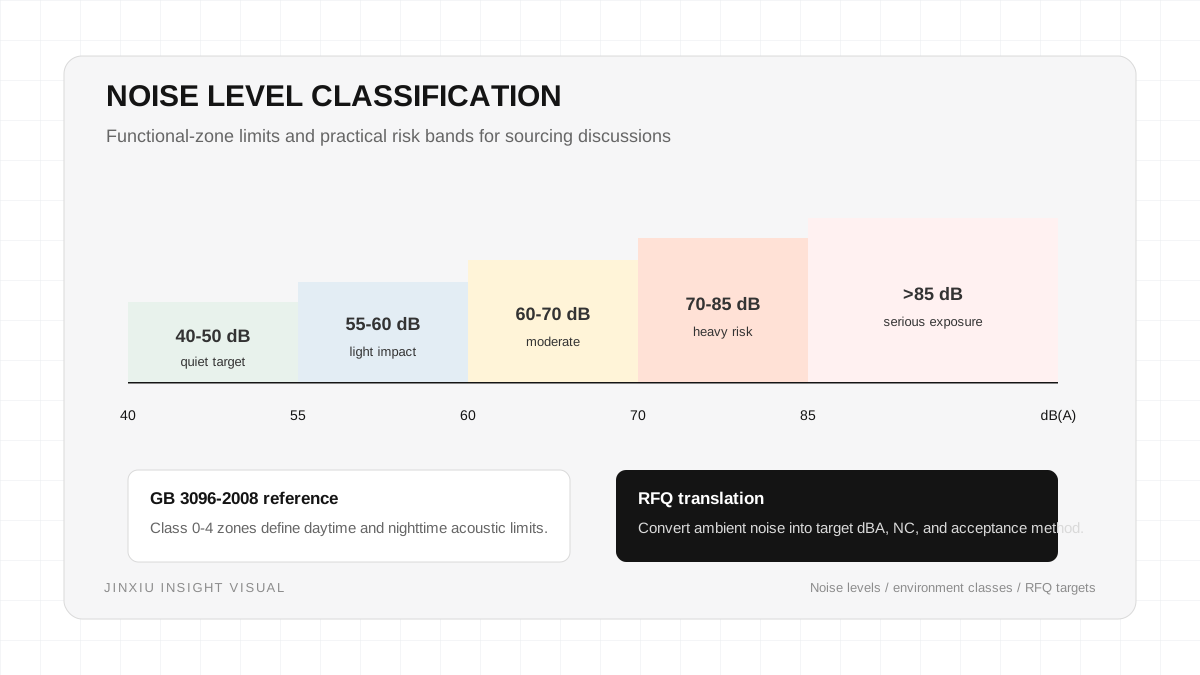
- Construction (GB 12523-2025, effective 2026-01-01): site-boundary day ≤70 / night ≤55 dB(A), with mandatory networked online monitoring.
- Transportation: noise barriers, low-noise pavement, and horn bans and traffic restrictions.
- Community life: time-limited renovation, upgraded residential sound-insulation standards, and bedroom low-frequency noise ≤35 dB.
Complaint and oversight channels
- Ecological and environmental authorities (industry / construction / transportation): 12369
- Police (community life / neighbor disputes / loudspeakers): 110
- General government services: 12345