dBA, NC or Rw? Which Acoustic Number Belongs in Your Test-Room Contract
Background noise (dBA), Noise Criterion (NC) and sound reduction (Rw) measure different things and are verified differently. Here is what each means, when to specify it, and why your acceptance clause should name a measured value.
Custom acoustic test rooms are bought on a number — but which number? Buyers often write ‘≤30 dB’ into a contract without saying dBA, NC or Rw. These three specifications measure different things and are verified in different ways. Getting it right is the difference between a clean acceptance and a dispute on site.
dBA — overall background noise, the way your test hears it
An A-weighted decibel (dBA) value is a single number for the total background noise inside the room, weighted to match human hearing. It is the most common acceptance spec for electronic-acoustic testing because it reflects what the microphone or speaker under test actually experiences. A target such as ≤30 dBA with HVAC running is typical for a production-line static room.
NC — a noise spectrum, not a single number
A Noise Criterion (NC) rating describes background noise across octave bands, so it controls the shape of the noise, not just its loudness. NC-20 is stricter than a bare dBA figure because it caps the low-frequency rumble that a dBA average can hide. Specify NC when low-frequency content from HVAC or compressors would corrupt sensitive measurements.
Rw — how much the structure blocks, independent of what is outside
The weighted sound reduction index (Rw) measures a wall or door assembly’s ability to block sound transmission, tested to ISO standards. It is a property of the construction, not of the finished room’s quiet. Rw matters when you must guarantee isolation from a known, loud neighbouring process — but on its own it does not promise an in-room dBA.
Which one to put in the contract
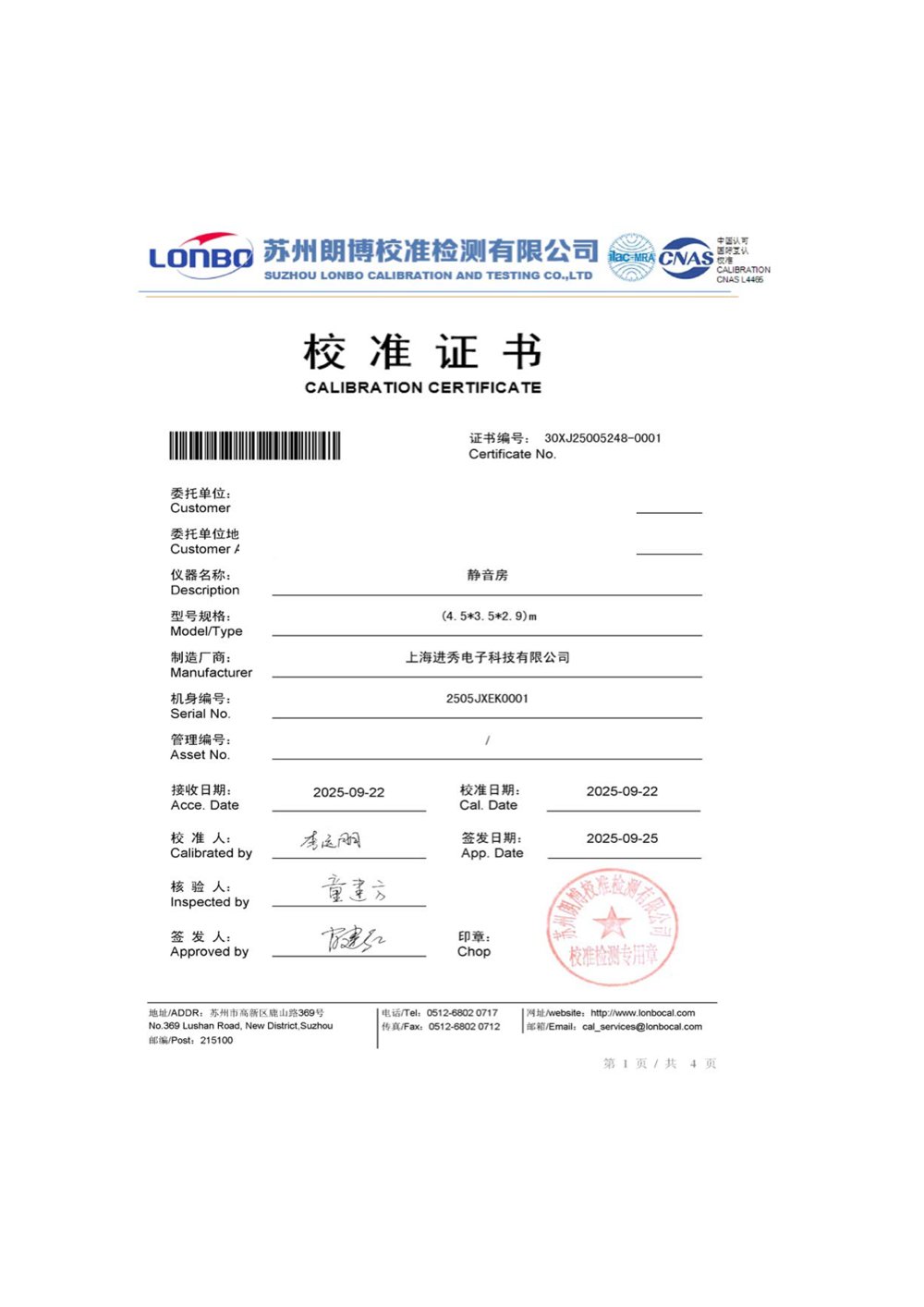
For most electronics test rooms, specify the in-room background noise as a measured dBA, and add an NC limit if low-frequency content is a risk. Treat Rw as a design input, not the acceptance criterion. Above all, name how it will be verified: an on-site measurement with a Class-1 sound level meter (IEC 61672), under defined conditions such as HVAC on and the line running.
Make acceptance a measured number
The cleanest contracts read: ‘In-room background noise ≤30 dBA, measured on site with a Class-1 meter (IEC 61672), with HVAC operating.’ That one sentence removes ambiguity — you accept the room on a verified result, not a promise. At Jinxiu, every acoustic room is signed off this way.